

New to the science of learning? Get started in an hour or less
/ Pooja K. AgarwalBy Pooja K. Agarwal, Ph.D.
I am elated and thrilled that research and resources on the science of learning have become quite popular in recent years. That also means that there’s so much out there and if you’re new to the science of learning, where do you start?
Your time is valuable! Keep reading for links to get you started learning about the science of learning as quickly as possible.
Learn about learning quick!

If you’re new to the science of learning, including research-based teaching strategies like retrieval practice, spacing, and interleaving, it might feel like there’s a buffet of resources with too many options. Decision fatigue is real, especially at this point in the school year.
Here are my recommendations for the easiest ways to get started:
Got 1 minute? Check out this quick overview about retrieval practice
Got 2 minutes? Subscribe for my newsletter for quick tips and free resources
Got 5 minutes? Read my interview about the science of learning with ASCD
Got 15 minutes? Explore my library including 100+ free resources, with everything in a Google Drive folder you can download
Got 30 minutes? Watch my SXSW EDU keynote on YouTube
Got 60 minutes? Listen to my podcast interview with the Cult of Pedagogy
If you have more time to dig in, my books Powerful Teaching and Smart Teaching Stronger Learning are available in hardback, paperback, Kindle, and audio book. Here’s my full list of more book recommendations on the science of learning.
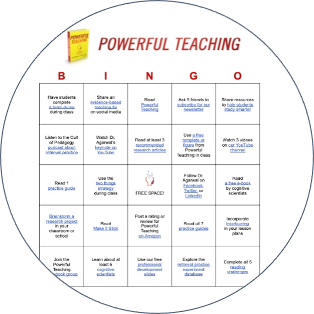
Celebrate the 5-year anniversary of Powerful Teaching and play Powerful Teaching Bingo! Watch a never-before-seen bloopers video from the book launch and learn more about powerful professional development.

Here are 3 learning habits to establish in your classroom ASAP and tons of retrieval practice activities you should incorporate right now. Don’t wait until later in the semester — students already have a lot to remember and retrieve.

While you’re getting some much-deserved rest and relaxation this summer, here are five reading challenges to learn about the science of learning. Read a book, a free download, recommended research articles, or all 100+ resources at retrievalpractice.org!

I want to share one of my favorite activities for retrieval practice: I call it Leave One, Add One. Use this engaging 30-minute activity with Google Slides in your classroom and boost your students’ long-term learning.

Check out our list of upcoming in-person and virtual events, promote diversity with our featured scientists for a workshop or interview, and read our retrieval practice activities that take one minute or less.

Have you heard of the "testing effect" or "test-enhanced learning?" Let's clarify: Retrieval practice is not the same thing as testing; it's the opposite. When you're talking about retrieval practice, stop using the word "test."

Get ready to party! Join our free Zooms with founder Dr. Pooja K. Agarwal for informal conversation, teaching tips, and resources to boost student learning.

Save the date for our live Zoom parties, watch Dr. Agarwal’s keynote from SXSW EDU, and watch Dr. Agarwal bust myths with Kari Byron (host of MythBusters) including the myths of learning styles, studying while listening to music, brain games, and more.

Chat with Dr. Agarwal during her office hours on Zoom Friday, April 8 between 5:00pm - 6:30pm EDT (eastern time)! Go to retrievalpractice.org/officehours for the Zoom link and more info.

The world has changed and teaching has changed. One thing hasn't changed: The importance of learning and the frustration of forgetting. Here are 5 new resources and downloads, all free, all by cognitive scientists, all to empower you to unleash the science of learning.

Here are five resources to create your own professional development on the science of learning – all developed by cognitive scientists, all free, all here to make your life easier.

Make a big impact on students' long-term learning with the four most powerful tools backed by cognitive science research: retrieval practice, spacing, interleaving, and feedback-driven metacognition. Access free downloads and our four favorite teaching strategies for each Power Tool.

Download our free professional development slides! You must unleash the science of learning; we can't do it alone. Use our slides and strategies, share them with your colleagues, and transform education. Truly powerful.
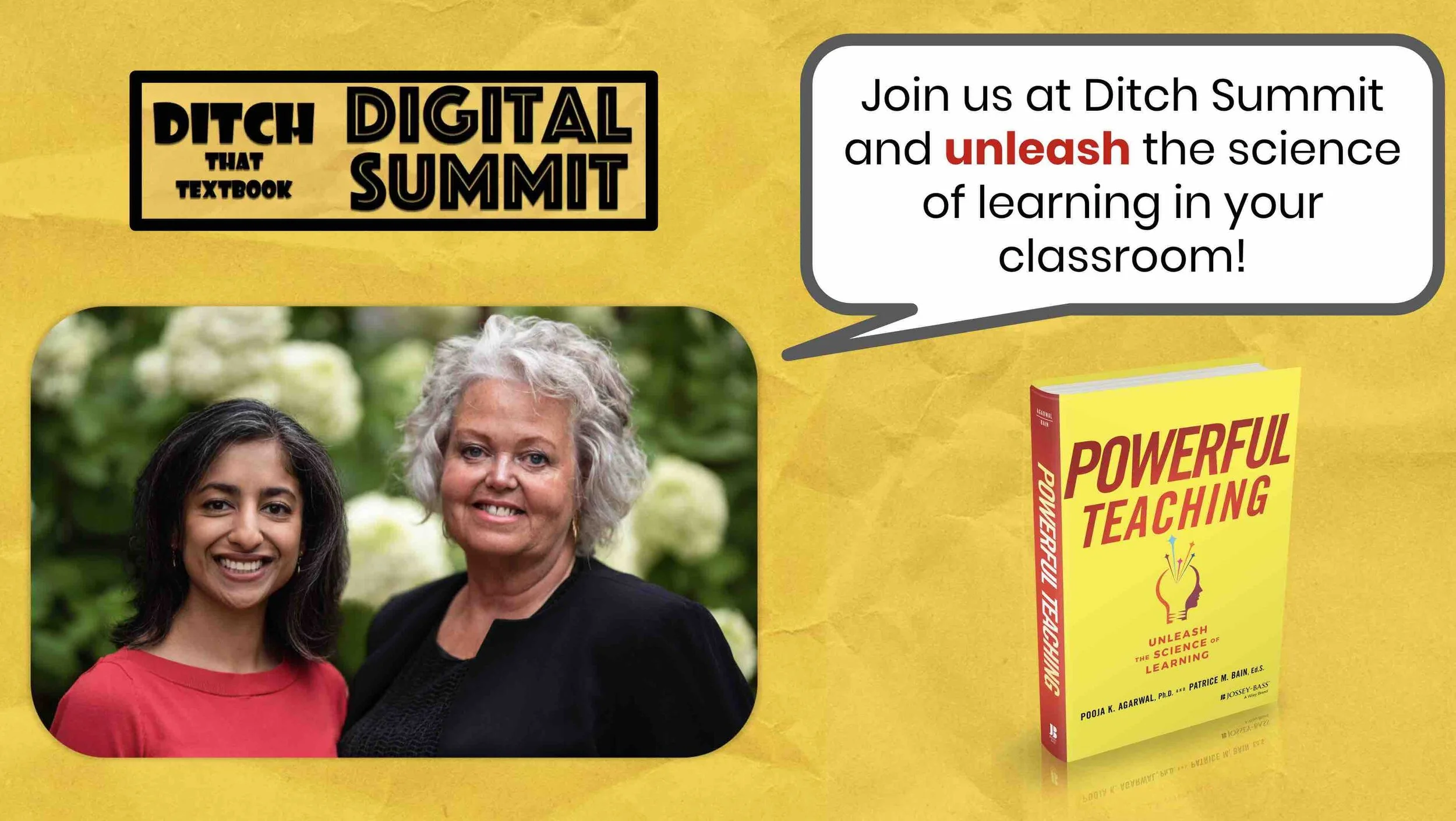
The 2019 Ditch Summit is going on right now and we are so thrilled with all the excitement for Powerful Teaching. Register to watch this year’s video featuring Pooja Agarwal and Patrice Bain, and check out 15+ sketchnotes from educators around the world!

Thank a teacher with these books! Check out our list of recommended books on the science of learning, find out why you should read the Powerful Teaching + Make it Stick duo, and explore a random collection of our all-time favorite books.

Whether you're reflecting on your teaching, or reflecting on the year coming to a close, use one of our favorite discussion prompts: rose, thorn, bud. Try this simple discussion prompt from Powerful Teaching with your students, in professional development, and over the holiday dinner table. Enjoy!

Lots of students use flashcards. But using flashcards doesn't guarantee they're using retrieval practice. In fact, students could be wasting their time. This week, we share three research-based tips to make flashcards more powerful. Help students study smarter, not harder.

Want a quick retrieval practice activity? Ask your students to Flash Forward! Simply ask them one thing they want to remember 10 years from now. Watch my students share their Flash Forwards about psychology. What do your students want to remember?

Powerful Teaching: Unleash the Science of Learning, has been named Book of the Year! I am so honored by Barbara Oakley's endorsement and dedication to sharing the science of learning with the world. Download a list of my favorite strategies from the book, too.





Read my new book, Smart Teaching Stronger Learning. Whether you teach K–12 students or graduate students, or you’re new to teaching or a long-time educator: If you want to improve student learning, this book is for you.