

Interleaving boosts learning by mixing up closely related topics, which challenges students to compare, contrast, and discriminate. For example, learning increases when students practice addition, subtraction, multiplication and division problems all mixed up, rather than practicing one type of problem at a time.


Are you learning to play an instrument? "Practice makes perfect," right? There's a catch: Just because you're practicing an instrument, a language, or even CPR resuscitation, it doesn't mean you're learning. What can you do? Use interleaving! Download our interleaving guide and read tips from an orchestra director. Boost learning and mix it up!

It's been awhile since we've talked about interleaving! Years of cognitive science research have established that interleaving – simply rearranging the order of retrieval opportunities – can increase (and even double) student learning. But what does interleaving actually look like? This week, try it for yourself!
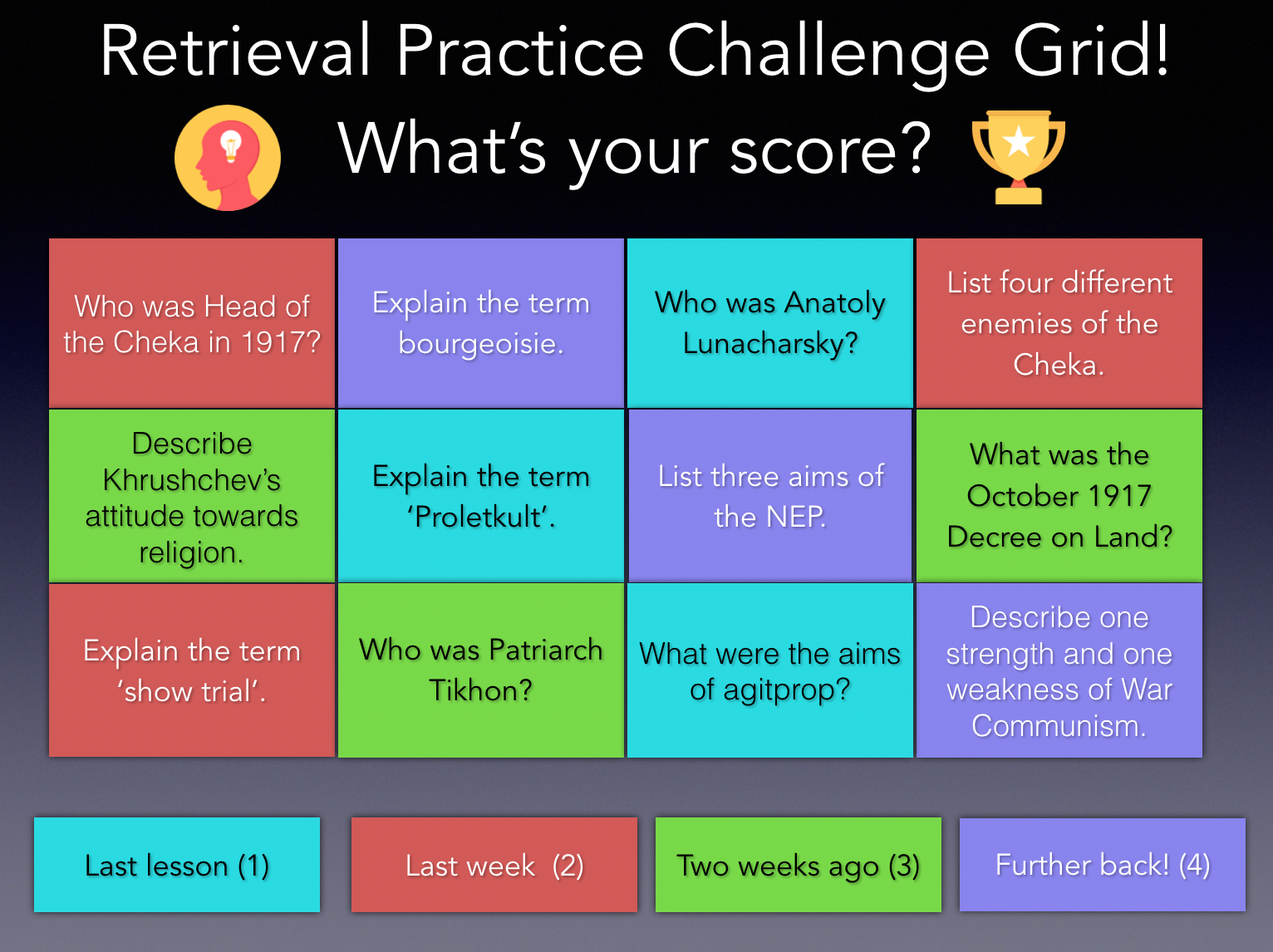
Resources are good. Templates are great! Check out Retrieval Grids, a flexible template you can download and create using low-stakes retrieval, spacing, interleaving, and feedback. Retrieval Grids aren't just for any classroom; adapt them for YOUR classroom!

Are cumulative exams the same thing as spacing or interleaving? Actually, not quite. Cumulative exams can be beneficial for learning. But there are also some subtle ways we can take cumulative exams to the next level – by ensuring that we (and our students) are using spacing and interleaving throughout the semester, not just before the exam.

How can we use interleaving without planning? Last week, we wrote about interleaving (and fruit salad). The key to effective interleaving is to mix up similar topics, which encourages students to discriminate between similar ideas, concepts, and problems. This week, learn about quick and fun strategies for interleaving in the classroom that put students in charge – more learning for them, less planning for us.

Interleaving is a powerful strategy that boosts learning by mixing up content students need to learn. Based on a wealth of cognitive science research, the challenge and "desirable difficulty" of interleaving can double exam performance compared to teaching content in "blocks" of the same concepts. But what's the secret to effective and fruitful interleaving? Mix similar topics. Read more about why and stay tuned for next week, when we'll share quick how to's.

Based on a growing mountain of evidence, interleaving is a strategy that dramatically improves learning. In a nutshell: The way practice problems are arranged can dramatically affect student learning. Download our free Interleaving Guide and learn more.
Get tips from cognitive scientist Dr. Veronica Yan, the world’s leading expert on interleaving. Boost student learning by mixing up concepts: problem sets, vocabulary words, different types of storytelling structures, etc. It’s a small adjustment that makes a big difference.