

What do metacognition and impostor syndrome have in common?
/
Think about a time you wanted to raise your hand during class to ask a question, but you didn’t. Why did you hesitate?
Now, consider some of your students who also hesitate to ask questions. It might be because they’re experiencing “impostor syndrome,” or feeling embarrassed when other students seem to be doing just fine.
I’ve previously shared tips and research about fostering metacognition (thinking about thinking). Here’s what’s new: Emerging research reveals that we need to help students make appropriate decisions based on their metacognition, too. Keep reading for insights from Dr. Lisa Son, one of the world’s experts on metacognition and impostor syndrome.
I also want to send along a friendly reminder to register for my free webinar on effective study strategies on Wednesday, October 14 at 5pm ET. As a preview, read my recent interview with the Associated Press. Please help spread the word about my webinar series. I hope to see you there!
Making decisions during learning
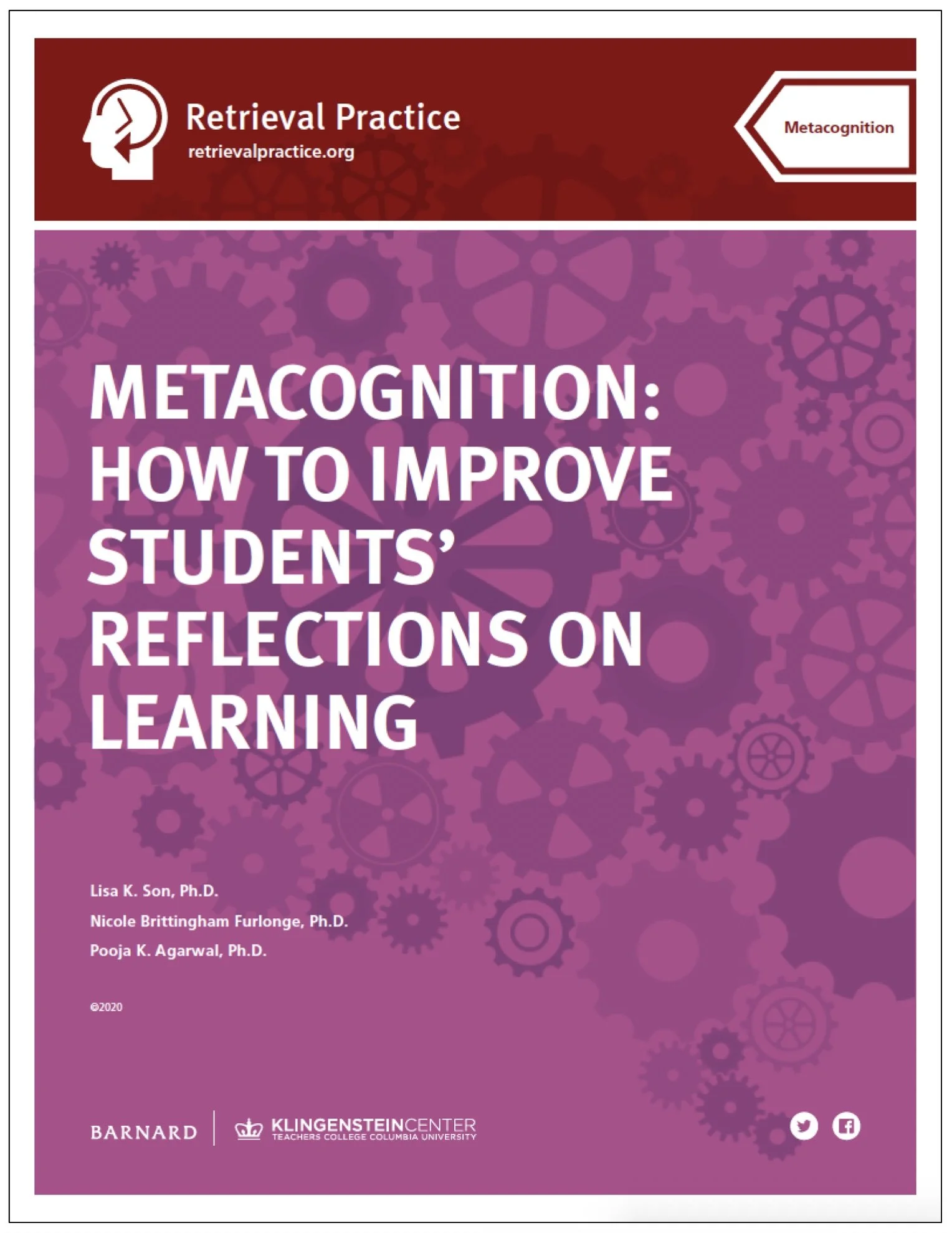
Metacognition, or thinking about one’s own thinking, is critical during the learning process. For example, you could ask your students, “On a scale from 0–100, how confident are you that you understand today’s lesson?” Research demonstrates that including this simple reflection question (what we call a “judgment of learning”) can result in more durable long-term learning (click here to download our free Practice Guide PDF on metacognition).
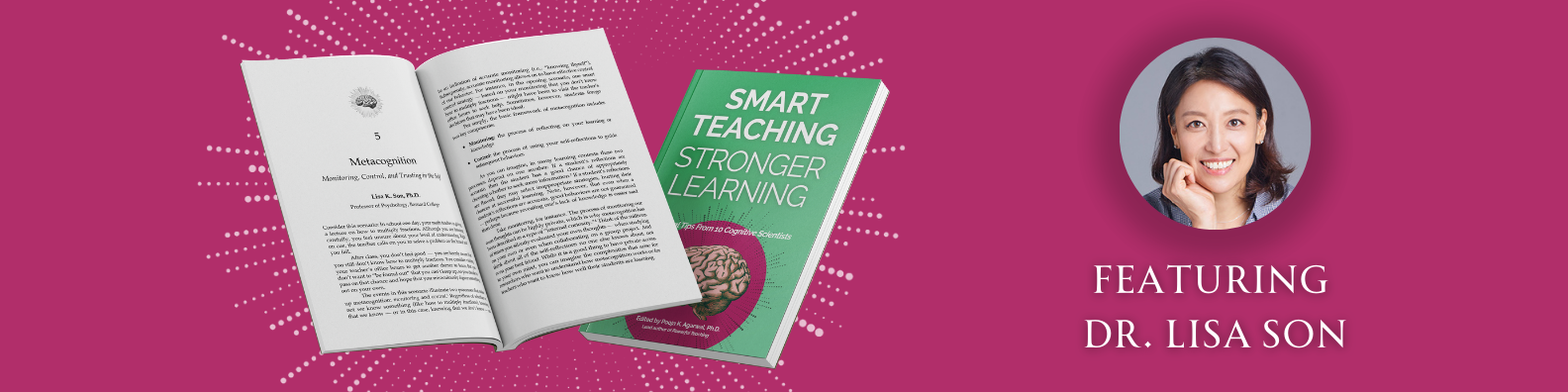
As cognitive scientist and educator Dr. Lisa Son explains in Smart Teaching Stronger Learning, metacognition includes two key components:
Monitoring: the process of reflecting on learning or knowledge
Control: the process of using reflections to guide behaviors and decisions
Monitoring and control depend on one another: If a student’s metacognitive reflections are accurate (monitoring), then they have a good chance of asking for help from the teacher when needed (control). However, if a student’s reflections are inaccurate, they may avoid asking for help, hurting their chances at successful learning.
Passive study strategies like re-reading or reviewing notes often lead to inaccurate monitoring and overconfidence. On the other hand, retrieval practice improves monitoring and students’ confidence better reflects their learning.
Control strategies and students’ decisions to ask for help are impacted by the way they feel in a social environment like a classroom. If students are worried that they lack knowledge or aren’t qualified to be in the class—feeling like an impostor—then they might do what they can to hide any weaknesses they see in themselves.
Here are Dr. Son’s tips on how you can support students’ decision making and control during their metacognitive process and reduce feelings of being an impostor:
Ask students to record their thinking strategies. For example, a student could journal about how they worked to solve a math problem or how they decided on a sentence structure, and what aspects were challenging along the way.
Provide ungraded retrieval practice. Students need safe opportunities to make mistakes and confront a fear of failure. Considering a culture of perfectionism, it is important to help students know that failure is a normal and necessary ingredient for successful learning.
Model your own learning process. Talk about how you developed your area of expertise, even if it was years or decades ago. You may have struggled, gotten a few bad grades, and worked with a tutor. This helps to emphasize that effort—not natural talent—leads to learning.
If students aren’t asking questions, it doesn’t mean they understand the lesson. It could mean they’re feeling like an impostor. Engage students in monitoring their learning and discuss the importance of mindful decision making throughout the learning process.
Learn about Dr. Lisa Son

Dr. Lisa Kim Son (she/her) is a Professor at Barnard College in New York City, New York. She specializes in research on metacognition, spacing, and student study strategies. She earned her Ph.D. from Columbia University.
Dr. Son’s research focuses on how accurately people know the “self,” and on the optimization of long-term retention. She studies metacognitive behavior in a range of populations, including adults, children, and monkeys.
Born and raised in the United States, Dr. Son has maintained active ties to her ancestral South Korea. She has earned multiple Fulbright scholarships to pursue research projects in Korea, including two published books in Korean focusing on the impostor phenomenon.
Recommended publications by Dr. Son:
Chen, S., & Son, L. K. (2024). High impostors are more hesitant to ask for help. Behavioral Sciences, 14(810), 1–17.
Jang, Y., Lee, H., & Son, L. K. (2024). When your judgment (mis)matches mine: How one’s self and others’ metacognitive judgments impact our perception of others. Education Sciences, 15(1), 22.
Jirout, J. J., Evans, N. S., & Son, L. K. (2024). Curiosity in children across ages and contexts. Nature Reviews Psychology, 3(9), 622–635.
Free webinar on October 14 at 5pm ET

Join me for my FREE webinar series on Zoom this fall. More than 1,000 people have registered! If you’d like to receive the recordings, make sure you register in advance.
Wednesday, October 14 at 5:00pm ET: How to help students study smarter (not harder) with research-based study strategies
Tuesday, November 17 at 12:00pm ET: Why forgetting is normal, why it’s good for learning, and how to normalize it in your classroom
Thursday, December 10 at 10:00am ET: How the brain actually works, why we fall for neuromyths, and how to be an informed consumer of neuroscience research








GenAI tools in education have been gaining momentum for years, but I’ve written about AI only once so far. Why? Because frankly, I’m tired of thinking about it. Here’s my current approach to genAI in my classroom, and my two recommendations for what to do if you’re tired, too.